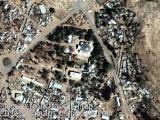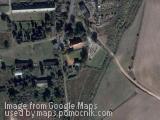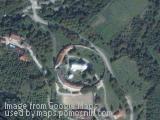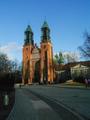

The Church of St Stanislaus Kostka, Zawiercie, Poland
February 22nd, 2008 / / Links: Google Earth, Google Maps, Yahoo! Maps, Virtual Earth / Nearest placesShare This
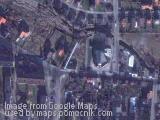
![]() |
Shortcut » Newest places | Posts with videos | Selected places | Submit interesting place
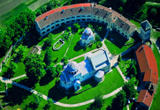
The Studenica monastery (Manastir Studenica) is a Serbian Orthodox monastery situated 39 km southwest of Kraljevo, in central Serbia. It is one of the largest and richest Serb Orthodox monasteries.
Stefan Nemanja, the founder of the medieval Serb state, founded the monastery in 1190. The monastery's fortified walls encompass two churches: the Church of the Virgin, and the Church of the King, both of which were built using white marble. The monastery is best known for its collection of 13th- and 14th century Byzantine-style fresco paintings.
In 1986 UNESCO included Studenica monastery on the list of World Heritage Sites.
The monastery Studenica, dedicated to the Presentation of the Holy Virgin, is the mother-church of all Serbian temples. It was constructed over quite long period of time. The first stage works were completed by the spring of 1196, when Stefan Nemanja abandoned his throne and settled in the monastery's foundation. When he later left for Hilandar, his son and successor Stefan took over the care of Studenica. Nemanja died in Hilandar in 1199. Nemanja's third son Sava, after reconciling his brothers Stefan and Vukan, moved Nemanja's relics to Studenica. Under guardianship of Sava, Studenica became the political, cultural and spiritual center of medieval Serbia. Among his other endeavors, Sava composed a "Studenica Typikon", the rule-book where he described St. Simon's (Nemanja's) life, leaving evidence of the spiritual and monastic life of his time.
The Archcathedral Basilica of St. Peter and St. Paul in Poznań is one of the oldest churches in Poland and the oldest Polish cathedral.
The cathedral is the supposed place of the baptism of Mieszko I. Built in the second half of the 10th century, it was raised to the status of a cathedral in 968 when the first missionary, Bishop Jordan, came to Poland. Saint Peter became the patron of the church because, as the first cathedral in the country, it had the right to have the same patron as St. Peter's Basilica in the Vatican. The pre-Romanesque church which was built at that time was about 48 meters in length. Remains of this building are still visible in the basements of today's basilica. The first church survived for about seventy years, until the period of the pagan reaction and the raid of the Bohemian duke Bretislav I (1034–1038). The cathedral was rebuilt in the Romanesque style, remains of which are visible in the southern tower. In the 14th and 15th centuries, the church was rebuilt in the Gothic style. At that time, a crown of chapels was added. A fire in 1622 did such serious damage that the cathedral needed a complete renovation, which was carried out in the Baroque style. Another major fire broke out in 1772 and the church was rebuilt in the Neo-Classical style. In 1821, Pope Pius VII raised the cathedral to the status of a Metropolitan Archcathedral and added the second patron - Saint Paul. The last of the great fires occurred on 15 February 1945, during the liberation of the city from the Germans. The damage was serious enough that the conservators decided to return to the Gothic style, using as a base medieval relics revealed by the fire. The cathedral was reopened on 29 June 1956. In 1962, Pope John XXIII gave the church the title of minor basilica.
The World According To Google - satellite pictures of the most interesting places on the World, satellite maps running on
This site is not affiliated with Google. This is hobby database of google satellite places locations all over the World
RSS: Entries & Comments.

Leave a passing comment »