
The World According To Google - satellite pictures of the most interesting places on the World, satellite maps: Most interesting places of the World (on google maps)

Choose category

Shortcut » Newest places | Posts with videos | Selected places | Submit interesting place

Interesting places:

Advertisements:

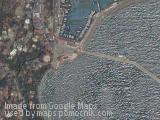
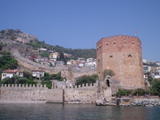
Red Tower (Kizilkule), Alanya, Turkey

February 22nd, 2008 / / Links: Google Earth, Google Maps, Yahoo! Maps, Virtual Earth / Nearest places
Share This

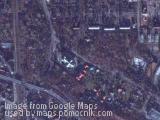
The Kızıl Kule (Red Tower) is a main tourist attraction in the Turkish city of Alanya. The building is considered to be the symbol of the city, and is even used on the city's flag. Construction of the building began in the beginning of the reign of the Anatolian Seljuk Sultan Ala ad-Din Kay Qubadh I and was completed in 1226. The sultan brought the accomplished architect Ebu Ali Reha from Aleppo, Syria to Alanya to complete the building. The name derives from the more red color brick he used in its construction. So well-made was it that it remains one of the finest examples of medieval military architecture. Though more preservation has gone into the building, it clearly is the best preserved Seljuk building in the city. The octagonal red brick tower protects the Tersane (arsenal) which dates from 1221. The building itself is 33 meters high and 12.5 meters wide. Like many buildings in the city, the Tower flies a Turkish Flag from its crenelations.
(more..)

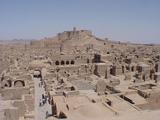
Bam - a city in Kerman Province of Iran

February 22nd, 2008 / / Links: Google Earth, Google Maps, Yahoo! Maps, Virtual Earth / Nearest places
Share This

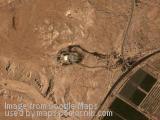
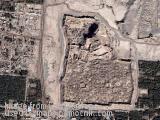
Bam is a city in Kerman Province of Iran. The city is the center of Bam County. The modern Iranian city of Bam surrounds the Bam citadel. Before the 2003 earthquake the official population count of the city was of around 90,000. There are various opinions about the date and reasons for the foundation of the citadel. Some people believe that Bam city was founded during the Parthian empire, a very powerful Persian empire, that ruled from 250 BCE to 226 CE. Economically and commercially, Bam occupied a very important place in the region and was famed for its textiles and clothes. Ibn Hawqal (943–977), the Arab traveller and geographer, wrote of Bam in his book Surat-ul-`ard (The Earth-figure):

Over there they weave excellent, beautiful and long-lasting cotton cloths which are sent to places all over the world There they also make excellent clothes, each of which costs around 30 dinars; these are sold in Khorasan, Iraq and Egypt.

(more..)

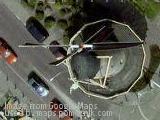
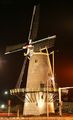
Antique windmill, Monster, Netherlands

February 22nd, 2008 / / Links: Google Earth, Google Maps, Yahoo! Maps, Virtual Earth / Nearest places
Share This

"De Vier Winden" (Monster) - antique windmill, Monster, Netherlands.

Send by: Adam


Bagatela - theatre in Cracow, Poland

February 22nd, 2008 / / Links: Google Earth, Google Maps, Yahoo! Maps, Virtual Earth / Nearest places
Share This

Bagatela - theatre in Cracow in Poland.

Send by: lelek


Sukiennice (Cloth Hall, Drapers’ Hall) in Cracow, Poland

February 22nd, 2008 / / Links: Google Earth, Google Maps, Yahoo! Maps, Virtual Earth / Nearest places
Share This

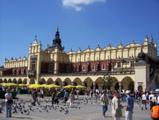
Sukiennice (Cloth Hall, Drapers' Hall) in Kraków, Poland, one of the city's most recognizable icons, was once a major centre of international trade. Traveling merchants met there to discuss business and to barter. During its golden age in the 15th century, it was the source of a variety of exotic imports from the East – spices, silk, leather and wax – while Kraków itself exported textiles, lead, and salt from the Wieliczka Salt Mine.

Kraków, Poland's royal capital, was among the most magnificent cities in Europe. However, its prosperity would not last indefinitely. The city's decline was hastened by wars and political ineptitude. By the time that restoration was proposed for Sukiennice in 1870, much of the historic city center was decrepit. Nevertheless, a change in political fortunes for the Galicians ushered in a renaissance of sorts, and the successful renovation of the Cloth Hall was one of the proudest achievements of this period.

(more..)

Nan Madol, Micronesia

February 12th, 2008 / / Links: Google Earth, Google Maps, Yahoo! Maps, Virtual Earth / Nearest places
Share This

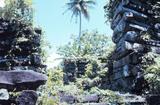
Nan Madol is a ruined city that lies off the eastern shore of the island of Pohnpei (presently one of the four states in the Federated States of Micronesia) and used to be the capital of the Saudeleur dynasty until about AD 1500. The city consists of a series of small artificial islands linked by a network of canals and is often called the Venice of the Pacific. The name Nan Madol means "spaces between" and is a reference to the canals that criss-cross the ruins.

Nan Madol was the ceremonial and political seat of the Saudeleur dynasty, which united Pohnpei's estimated 25,000 people. Set apart on the main island of Pohnpei, it was a scene of human activity as early as the first or second century AD. By the 8th or 9th century islet construction had started, but the distinctive megalithic architecture was probably not begun until perhaps the 12th or early 13th century.

(more..)

Church of St. Peter and St. Paul, Zawiercie, Poland

February 12th, 2008 / / Links: Google Earth, Google Maps, Yahoo! Maps, Virtual Earth / Nearest places
Share This

Church of St. Peter and St. Paul in Zawiercie, Poland. Church built in 1906.

Send by: Barto11


Qumran, Palestine

February 12th, 2008 / / Links: Google Earth, Google Maps, Yahoo! Maps, Virtual Earth / Nearest places
Share This

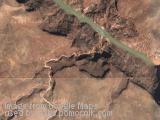
Qumran is located on a dry plateau about a mile inland from the northwestern shore of the Dead Sea in the West Bank, just next to the Israeli Kibbutz of Kalia. The site was most likely constructed sometime during or before the reign of John Hyrcanus, 134-104 BC and saw various phases of occupation until, probably after the fall of Jerusalem in 70 AD, Titus and his X Fretensis destroyed it. It is best known as the settlement nearest to the hiding place of the Dead Sea Scrolls in the caves of the sheer desert cliffs.

Since the discovery in 1947 of nearly 900 scrolls in various states of completeness, mostly written on parchment, extensive excavations of the settlement have been undertaken. Cisterns, possibly a few Jewish ritual baths, and cemeteries have been found, along with a dining or assembly room and debris from an upper story alleged by some to have been a scriptorium as well as pottery kilns and a tower.

(more..)
Close
E-mail It